A robot you can learn with
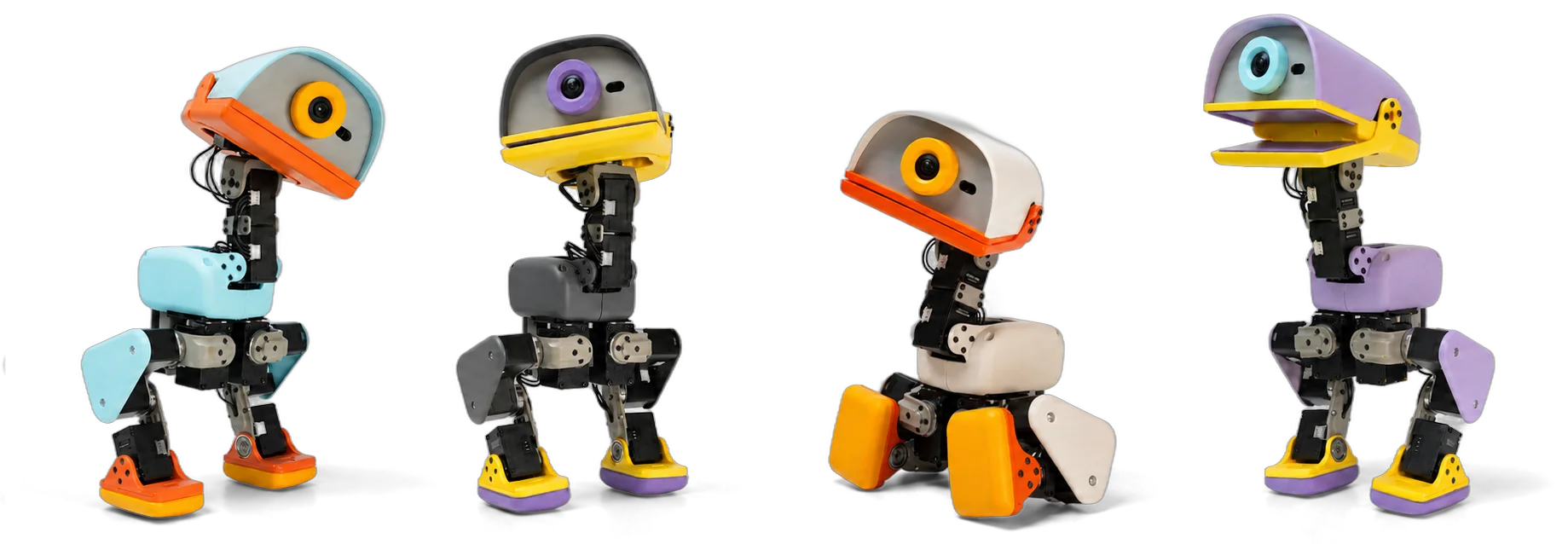
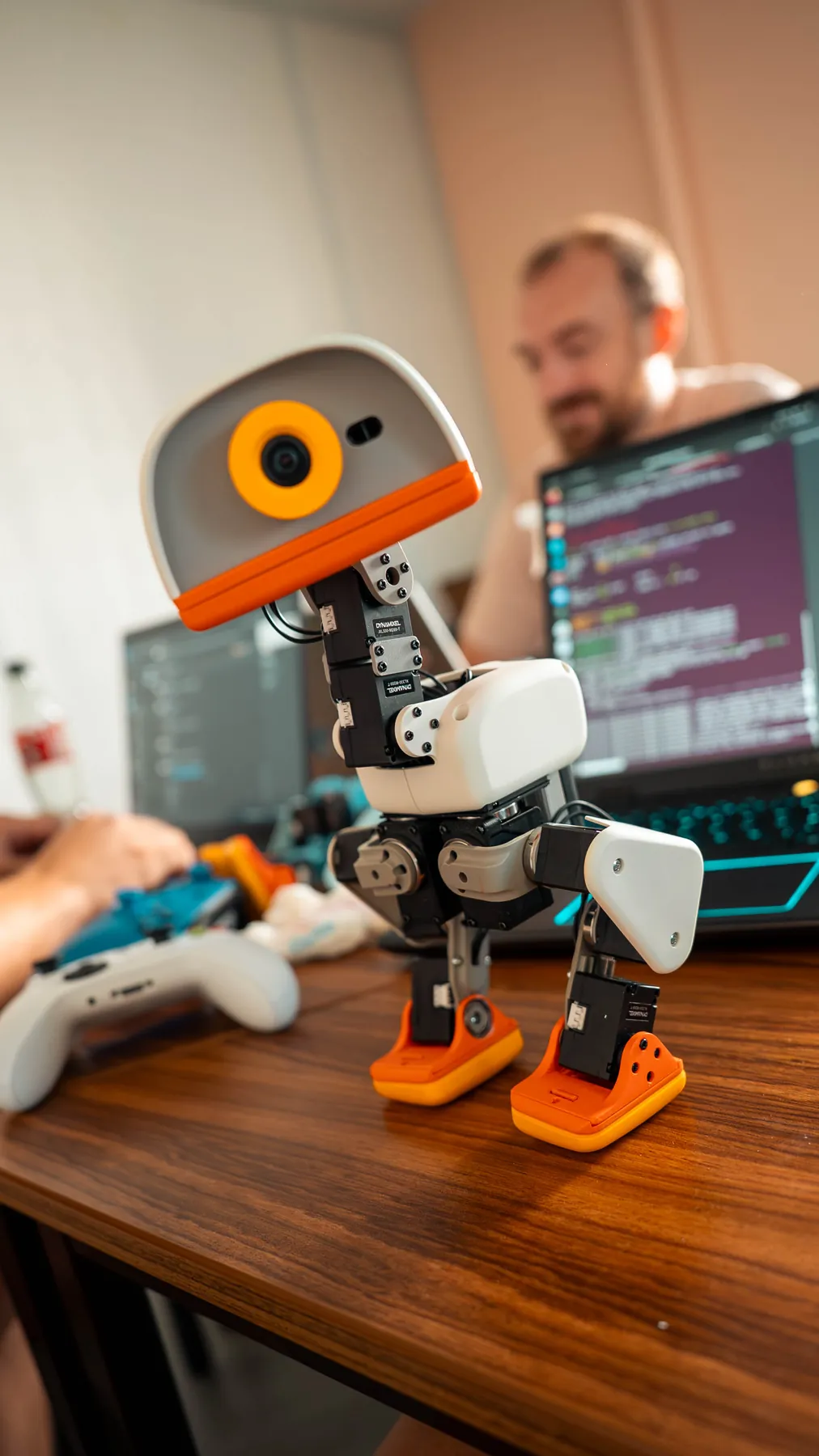
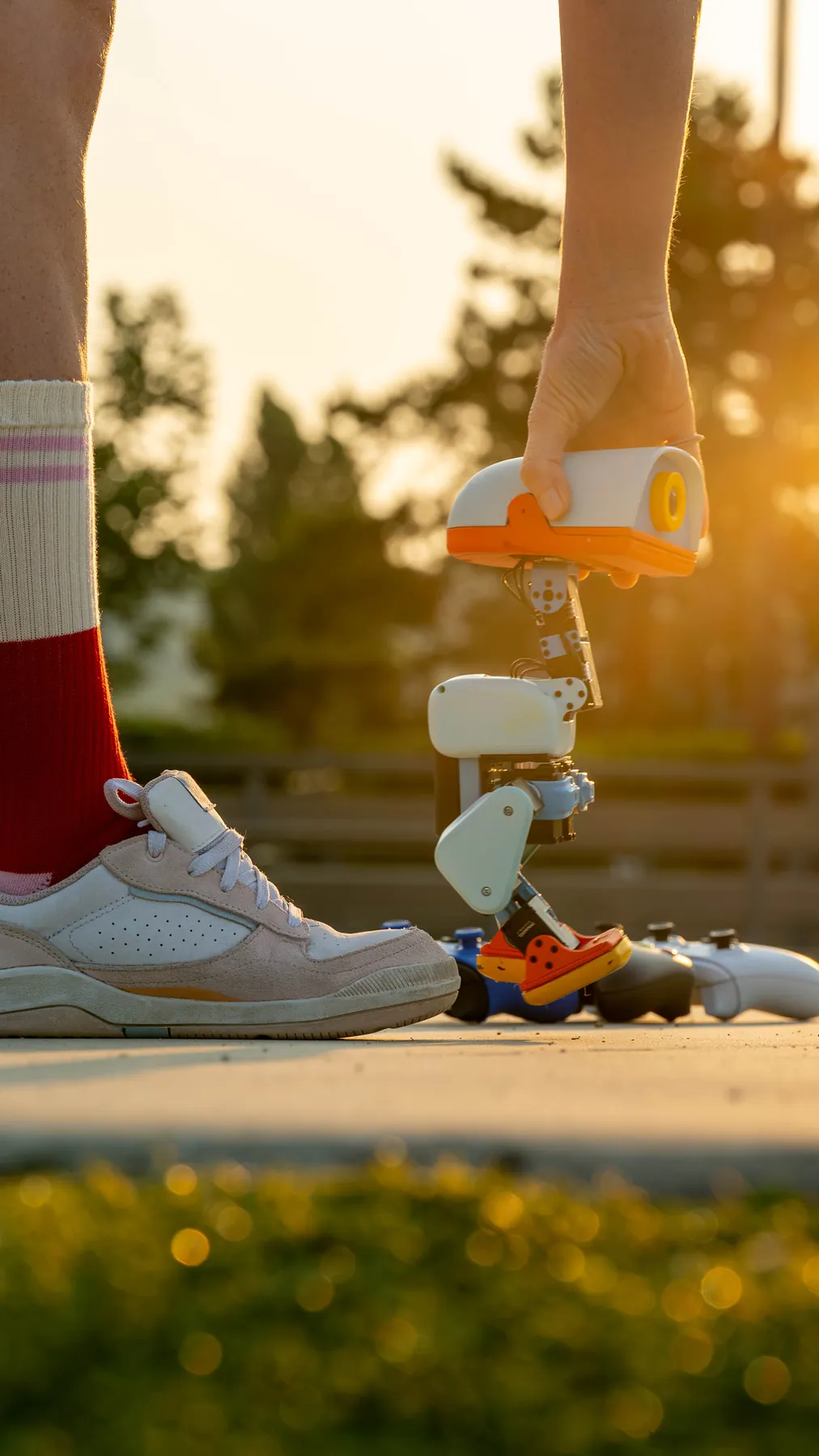
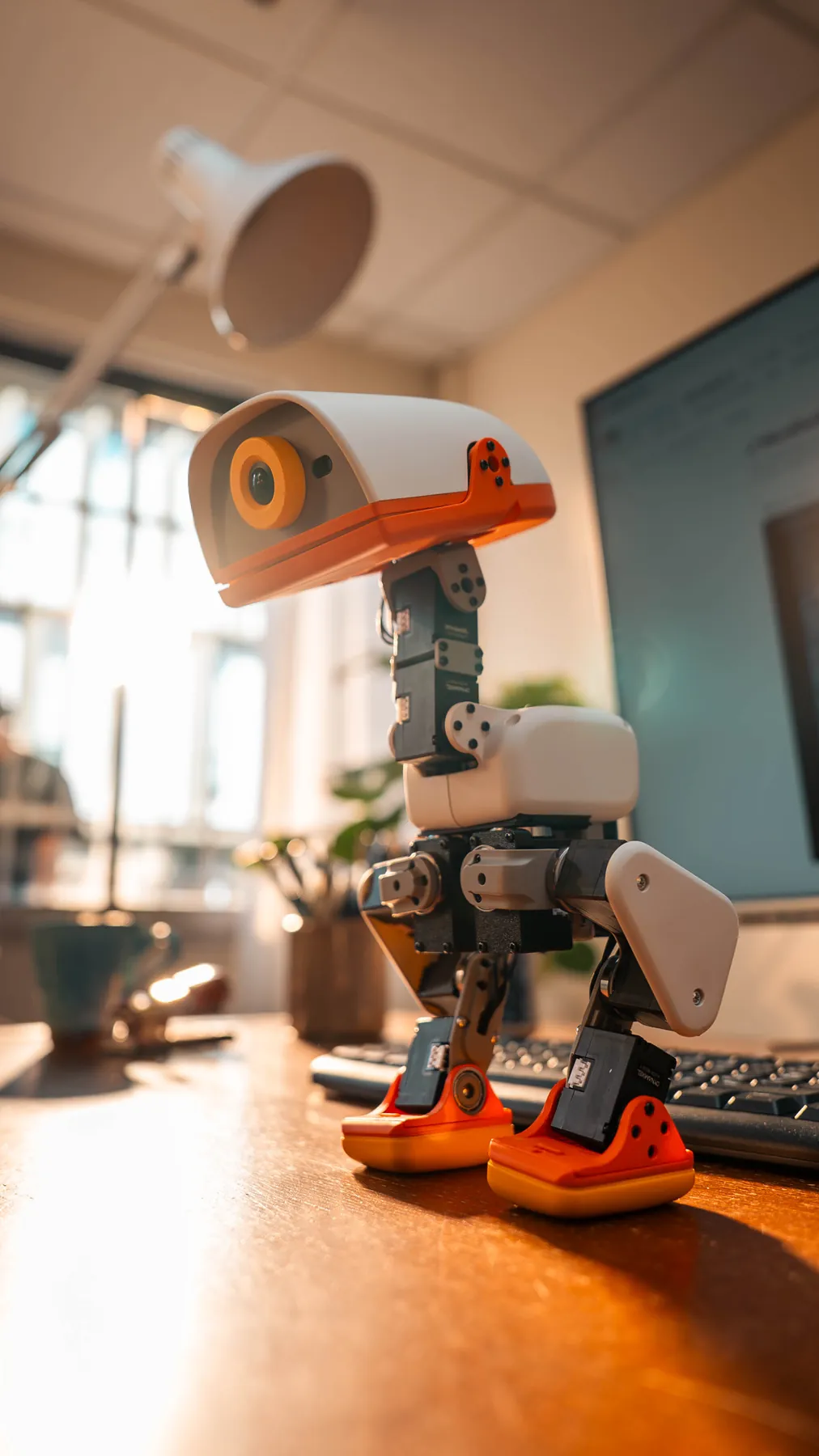
Microduck is a small, two-legged robot made by Pollen Robotics. Its movement comes from learned control policies. That makes it an approachable subject for exploring a bigger question: how can a machine learn to act in the physical world?
The interesting part is the path behind a movement. A developer can work in simulation, evaluate a controller and eventually run a compatible policy on hardware. The finished duck is one end of that learning loop.
Choose your starting point
If you have just seen a clip, start with the official demonstrations and our simulator guide. Watch how balance changes when the robot turns or stops. You do not need to buy a robot to begin exploring the project.
If you already work with software, open the runtime repository and its architecture document. If your interest is machine learning, begin with the separate reinforcement-learning repository. Keeping these two projects distinct makes the documentation much easier to navigate.
Set the right expectations
A demonstration of walking or picking up an object is a specific behavior, not proof that the robot can solve arbitrary household tasks. Look for documented capabilities and reproducible examples when evaluating a project.
For a first experiment, write down one question: how does a movement start, what happens when it finishes, and how does the robot return to a stable state? Following that question through the source material is more useful than trying to read the entire codebase in one sitting.
A short reading route
- Watch a movement on the official product page.
- Try the virtual robot.
- Read our software map to choose the right repository.
- Use the source links below for implementation details.
GO TO THE SOURCE
Keep exploring.
This is an independent introduction. For current implementation details, use the original references below. Last checked Sep 6, 2026.
- Meet Microduck ↗Pollen Robotics
- The story behind Microduck ↗Pollen Robotics
- Microduck on GitHub ↗Pollen Robotics