Published hardware at a glance
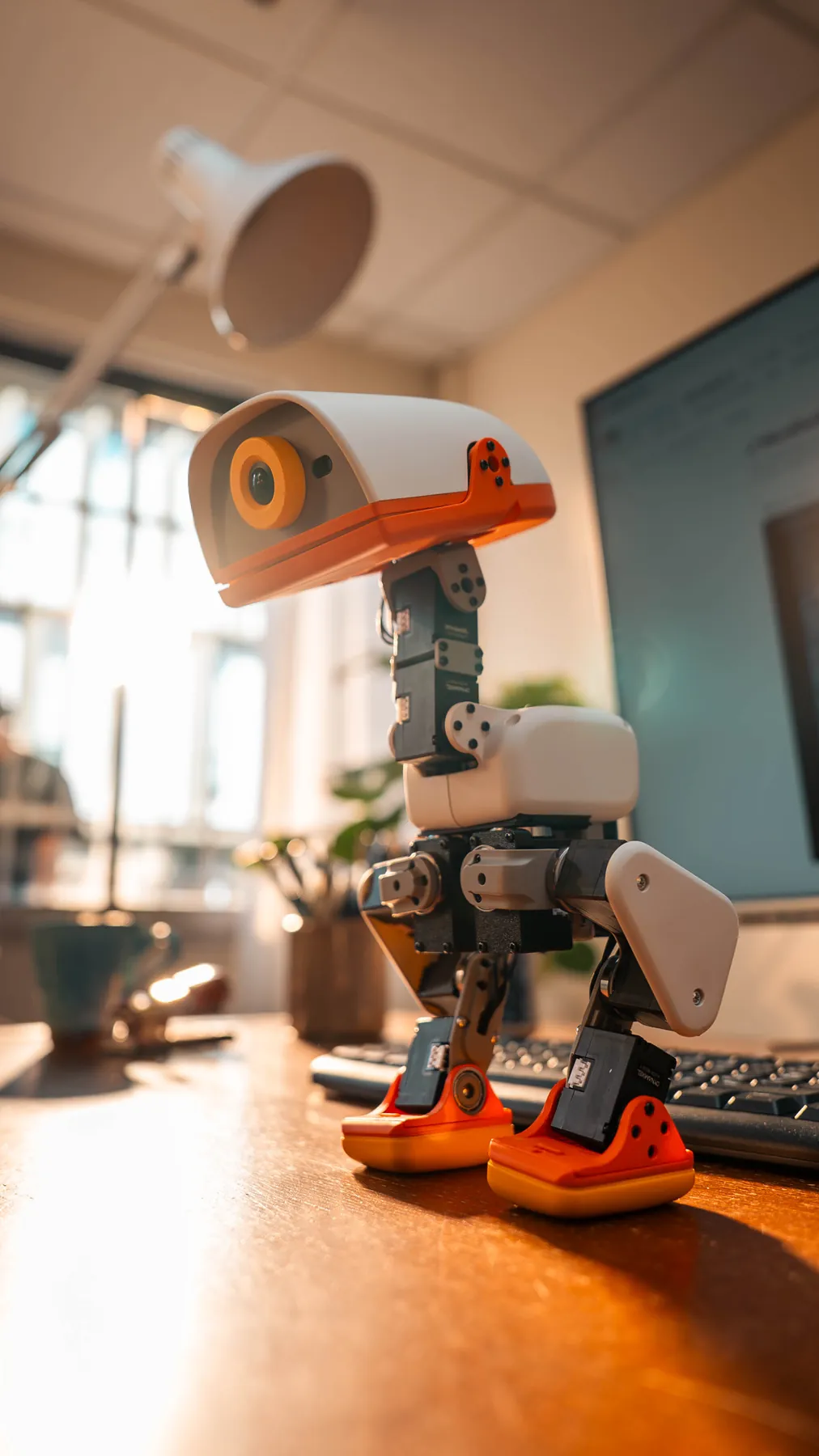
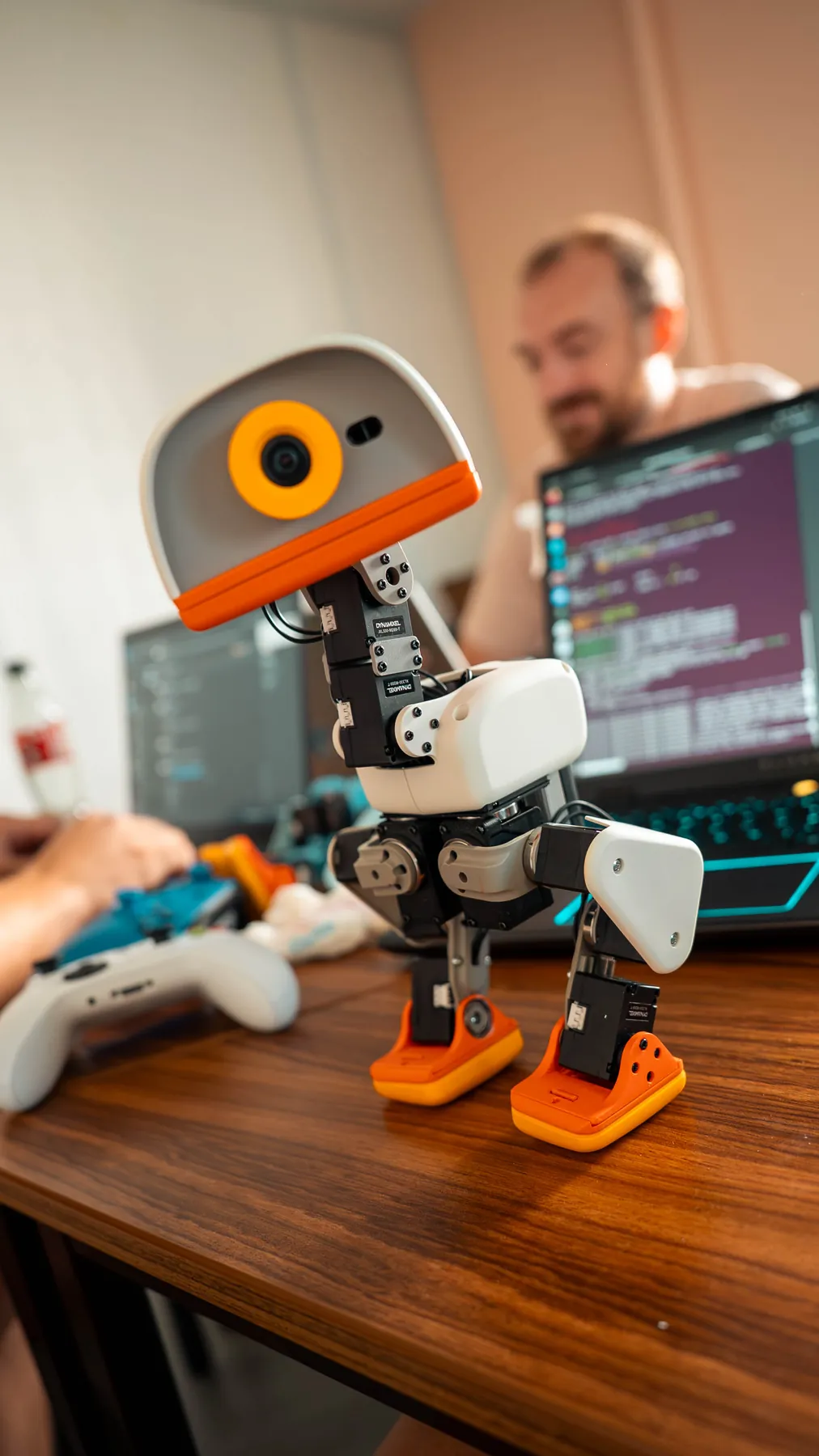
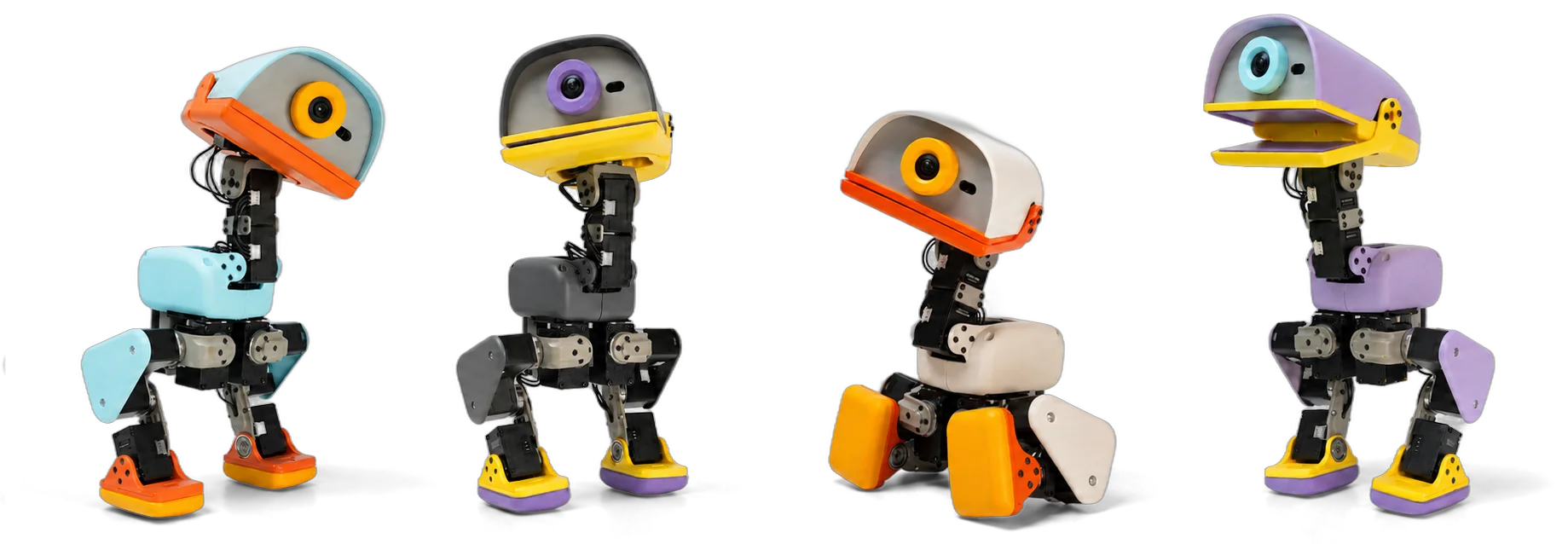
The official press sheet lists a roughly 25 cm tall robot with 15 motors, a Rockchip RK3566 processor, 1 GB of memory and 32 GB of storage. Sensing includes a camera, two IMUs and an 8 × 8 time-of-flight array. It connects over Wi-Fi and Bluetooth.
| Height / width | 25 cm / 14 cm |
|---|---|
| Weight | Under 800 g, per the detailed press sheet |
| Actuation | 15 motors; articulated beak |
| Power | Removable NP-F550 battery, 2600 mAh |
| Policy frequency | 50 Hz |
Read provisional details carefully
Camera resolution and field of view, sensor range, radio versions and age guidance are still described as provisional by the manufacturer. Check the linked specification sheet before choosing hardware for a particular experiment.
For your own notes, separate three columns: a published value, a measurement you made, and a requirement your project needs. That prevents a test result from accidentally becoming a product specification.
Use specifications to choose an experiment
Start from what you want to observe. A balance experiment needs a repeatable starting pose and a way to compare movement. A camera experiment needs an understanding of the image pipeline. A connectivity experiment needs clear records of the host, network and software version.
Choose one subsystem for a first project. Combining motion, perception and remote control immediately makes it difficult to tell which part caused an unexpected result. The development references are a useful next stop once you have chosen that subsystem.
GO TO THE SOURCE
Keep exploring.
This is an independent introduction. For current implementation details, use the original references below. Last checked Sep 6, 2026.
- Microduck press kit ↗Pollen Robotics